The FJ40 is one of the most sought-after classic 4x4s in America today. Its history explains a lot: why you see FJ40, BJ40 and BJ42 in the same listings, and why so many owners want to bring their truck back to its original look. Let's go back to the beginning.
Before the 40 Series: from "Toyota Jeep BJ" to Land Cruiser
The first ancestor dates from 1951. Toyota called it the "Toyota Jeep BJ". The Jeep name, however, belonged to Willys, so in 1954 Toyota renamed its truck the Land Cruiser. The letters "BJ" survived in model codes for decades.
Next came the 20 Series Land Cruisers. The 40 Series replaced them, keeping the same idea: a simple, tough, utilitarian off-roader.
1960: the FJ40 is born
In 1960, Toyota launched the 40 Series. The core model was the FJ40: short wheelbase and a 3.9-liter F gas inline-six. The code is easy to read: F for the engine, J for Land Cruiser, 4 for the series, 0 for the version. To decode every other code, see our guide to Land Cruiser model codes.
You can spot an FJ40 by its short, boxy tub and its fold-down windshield. It came in several body styles:
- soft top, with a canvas roof and sides;
- hard top, with a steel roof;
- pickup, mostly on the long wheelbase.
At the rear, depending on year and market, the tub closed with either a drop tailgate or rear barn doors. Both setups still show up on trucks being restored today, and they decide which soft top you need. Our drop tailgate vs barn doors guide shows how to tell them apart.
In the US, the FJ40 became the face of the Land Cruiser name. Toyota sold it here from the 1960s to the early 1980s, which is why "FJ40" is the household name on this side of the Atlantic.
Three wheelbases, one series
The 40 Series wasn't just the short wheelbase. Toyota built it in three lengths:
| Wheelbase | Length | Models |
|---|---|---|
| Short | 2,285 mm (90 in) | FJ40, BJ40, BJ41, BJ42 |
| Medium | 2,430 mm (95.7 in) | FJ43, BJ43, BJ44, BJ46 |
| Long | 2,950 mm (116 in) | FJ45, BJ45, HJ45, HJ47 |
The short wheelbase, with its compact tub and soft top, became the very image of the 40 Series. The long versions, often pickups, also received the 3.6-liter H and later 4.0-liter 2H diesel sixes in the HJ45 and HJ47.
FJ40 timeline: key dates
| Year | Milestone |
|---|---|
| 1951 | First model, called the "Toyota Jeep BJ" |
| 1954 | The name becomes Land Cruiser |
| 1960 | 40 Series launched with the FJ40, 3.9 L F gas inline-six |
| 1974 | BJ40 arrives, 3.0 L B four-cylinder diesel (about 80 hp) |
| 1975 | FJ40 switches to the 4.2 L 2F gas six |
| Late 1970s | BJ41, 3.2 L 2B diesel, limited distribution |
| 1980-1981 | BJ42, 3.4 L 3B diesel (about 90 hp), 5-speed gearbox, front disc brakes |
| 1984 | Production ends in Japan; the 70 Series takes over |
| Until 2001 | Production continues in Brazil as the Bandeirante |
The 1970s: the diesel BJ40 joins the lineup
On the short wheelbase, the gas FJ40 had the field to itself for years. That changed in 1974 with the BJ40 and its 3.0-liter B four-cylinder diesel, about 80 hp. Slower than the FJ40, but much easier on fuel.
In 1975, the FJ40 got the 4.2-liter 2F, replacing the 3.9-liter F. In the late 1970s came the BJ41, with the 3.2-liter 2B diesel, sold in fewer markets.
The diesel BJ versions were not part of Toyota's official US lineup. In Europe, Africa and much of the world, though, they made the Land Cruiser's reputation. In France, nobody says "40 Series" at a club meet: they say "a BJ". Many BJs have since been imported into the US, which is why you see more of them every year.
1980-1981: the BJ42, the final evolution
The early 1980s brought the BJ42, with the 3.4-liter 3B diesel, about 90 hp. With this update, the 40 Series also got a 5-speed gearbox and front disc brakes. The BJ42 is often seen as the most refined of the four-cylinder diesels.
The key point for owners today: the FJ40, BJ40 and BJ42 share the same body and the same chassis. Only the engine and some equipment change. Our FJ40 vs BJ40 vs BJ42 comparison breaks it down model by model.
1984: the 70 Series takes over, and the Bandeirante lives on
In 1984, 40 Series production ended in Japan. It was replaced by the 70 Series, which carried the same utilitarian spirit with new engines and new bodies: BJ70, BJ73, and later HZJ73 and KZJ73. The whole family is covered in our guide to Land Cruiser 70 Series models.
That wasn't the end of the 40 Series story, though. In Brazil, it stayed in production as the Bandeirante until 2001. That's more than forty years between the first FJ40 and the last Bandeirante.
The FJ40 today: a true collector vehicle
More than forty years after Japanese production ended, the FJ40, BJ40 and BJ42 are full-blown collector trucks. Many owners restore them to factory condition, down to the smallest details, while others build them into capable trail rigs that still look the part.
On a vehicle this old, some areas deserve close attention, rust above all: rocker panels, floor, drip rails, door bottoms, windshield frame corners and frame rails. If you're thinking of buying one, our used FJ40 buying checklist lists everything to inspect.
Getting the original look back: the soft top
An FJ40 with its windshield up and a soft top stretched over the bows is the silhouette everyone pictures. After decades, the original canvas is usually torn, shrunk or long gone.
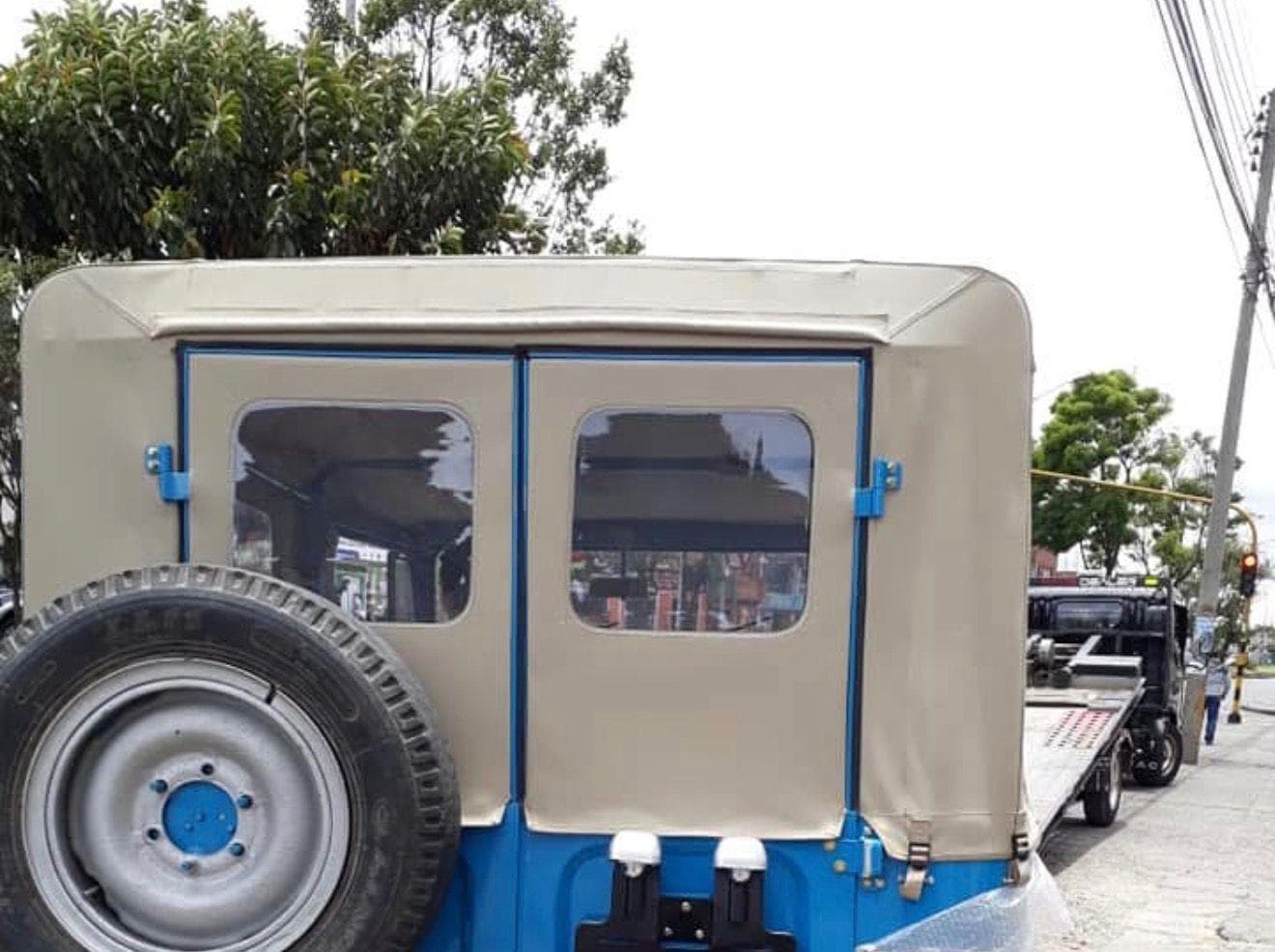
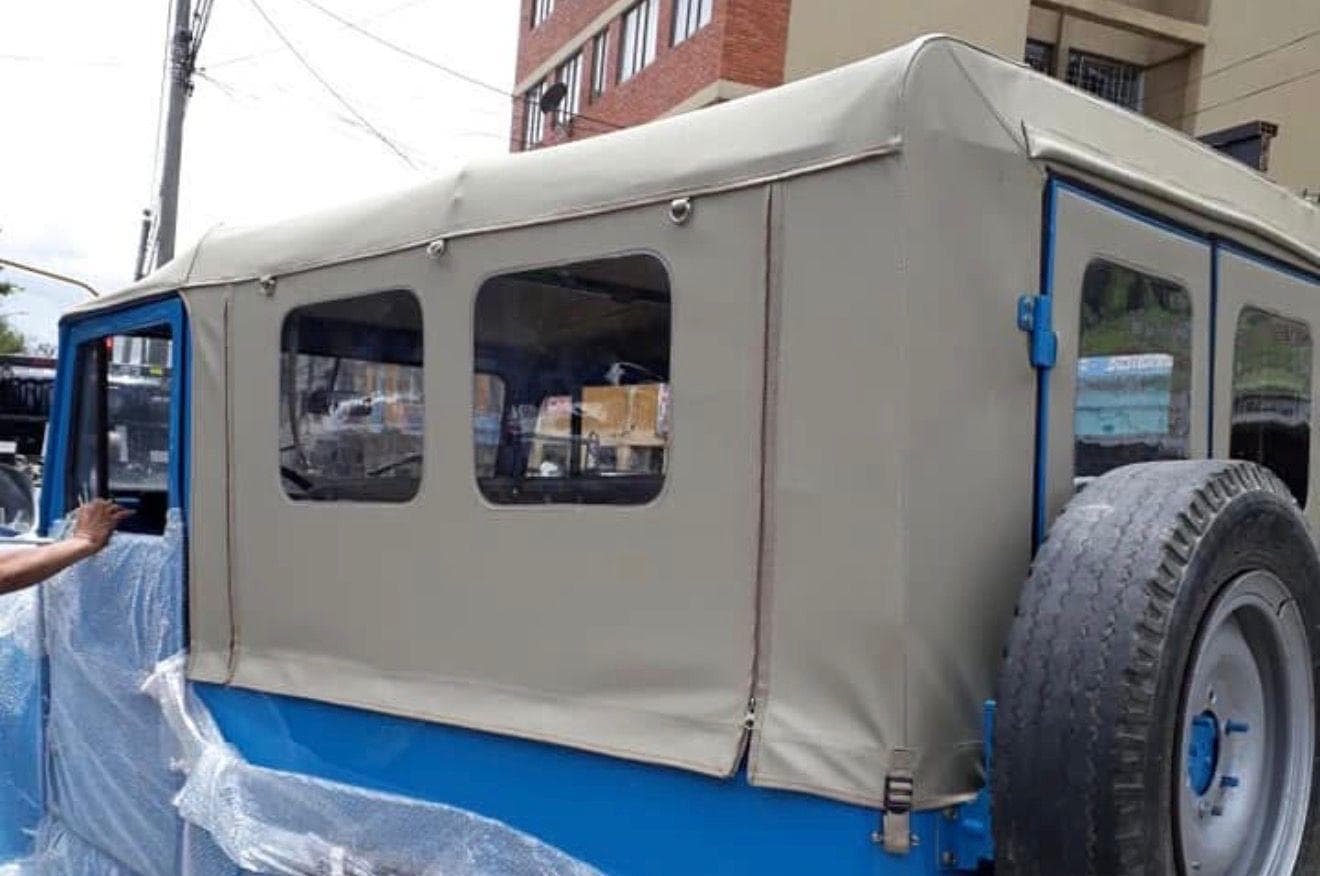
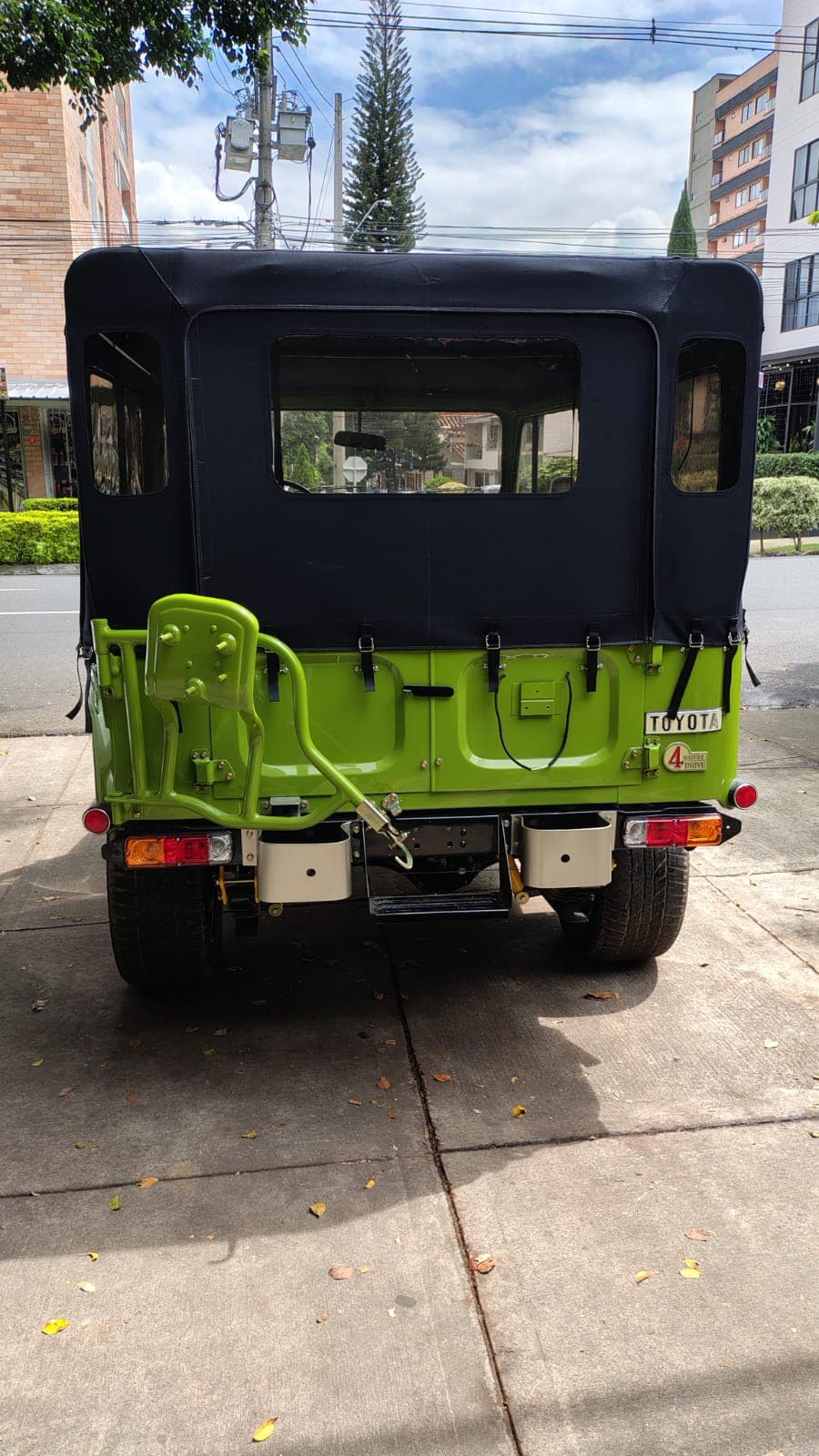
Our FJ40 / BJ40 / BJ42 full soft top follows that original design:
- cut to Toyota's original short wheelbase pattern;
- roof, sides, doors and rear window;
- UV-treated vinyl, tougher and easier to care for than cotton canvas;
- tan, close to Toyota's original canvas, or black;
- mounts on the original bows and factory fasteners, with no drilling or modification;
- two versions: drop tailgate or rear barn doors.
Each top is handmade by Land Cruiser upholstery specialists in our workshop in Medellín, Colombia. You can read more about us on our About us page. Shipping to the US is free and tracked, in 1 to 4 weeks.
To choose the right top, read our FJ40 soft top buying guide, then see the FJ40, BJ40 and BJ42 soft top. Not sure about your model or rear closure? Send us a photo through our contact page.
FAQ
What year did the Toyota FJ40 come out?
The FJ40 was launched in 1960 with a 3.9-liter F gas inline-six. It switched to the 4.2-liter 2F in 1975 and was built in Japan until 1984.
When did the diesel BJ40 appear?
The BJ40 arrived in 1974 with the 3.0-liter B four-cylinder diesel, about 80 hp. It was followed by the BJ41 (2B, 3.2 L) in the late 1970s and the BJ42 (3B, 3.4 L) in 1980-1981.
What is the Toyota Bandeirante?
It's the name under which the 40 Series continued to be built in Brazil after Japanese production ended in 1984. The Bandeirante was produced until 2001.
Why was the first Land Cruiser called a Jeep?
The first model, in 1951, was called the Toyota Jeep BJ. Since Jeep was a Willys trademark, Toyota renamed it Land Cruiser in 1954.
Was the BJ40 sold in the United States?
The diesel BJ versions were not part of Toyota's official US lineup; the FJ40 was the 40 Series sold here. Many BJs have since been imported, so you'll find them on US roads today.
Not sure which top fits your truck? Send us a photo of your Land Cruiser and we'll get back to you quickly.