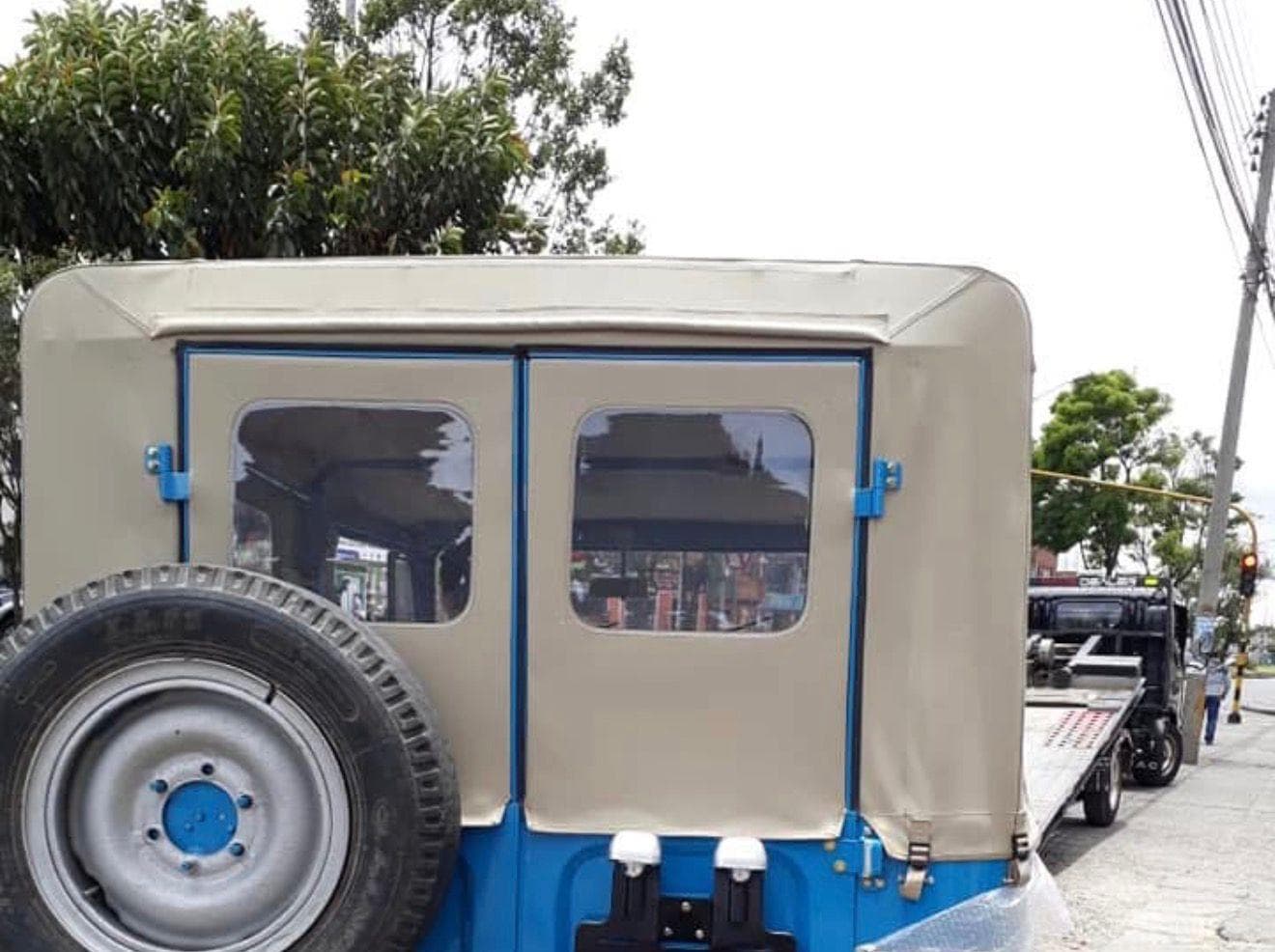
If you've spent time on Land Cruiser forums or import listings, you've seen FJ40, BJ40, BJ41 and BJ42 thrown around as if they were different trucks. They are all 40 Series Land Cruisers on the same short wheelbase of 2,285 mm (90 in). What changes from one code to the next is mainly the engine.
The rule: the first letter is the engine
In Toyota's naming, the first letter tells you the engine family. The J stands for Land Cruiser, the 4 for the 40 Series, and the last digit gives the version and wheelbase.
- F = gas inline-six
- B = four-cylinder diesel
- H = six-cylinder diesel (long wheelbase HJ45 and HJ47 only)
So an FJ40 is a 40 Series with a gas six, and a BJ40 or BJ42 is a four-cylinder diesel. In the US, the FJ40 is the household name because it's the version Toyota sold here. The diesel BJ versions were not part of Toyota's official US lineup; many have since been imported, which is why you see more of them every year. For every other code (HJ, HZJ, KZJ, LJ), see our guide to Land Cruiser model codes.
Side-by-side: engines and years
| Model | Engine | Displacement | Type | Period | Wheelbase |
|---|---|---|---|---|---|
| FJ40 | F, then 2F | 3.9 L, then 4.2 L | gas inline-six | 1960 to 1984 (2F from 1975) | short, 90 in |
| BJ40 | B | 3.0 L (about 80 hp) | 4-cyl diesel | from 1974 | short, 90 in |
| BJ41 | 2B | 3.2 L | 4-cyl diesel | late 1970s, limited markets | short, 90 in |
| BJ42 | 3B | 3.4 L (about 90 hp) | 4-cyl diesel | from 1980-1981 | short, 90 in |
FJ40 vs BJ40: gas or diesel
The FJ40 is where the 40 Series began, in 1960. Its F engine, a 3.9 L gas inline-six, was replaced in 1975 by the 4.2 L 2F. This is the truck that gave the whole series its face, and the one most American collectors grew up with.
The BJ40 arrived in 1974 with the 3.0 L B four-cylinder diesel, about 80 hp. It has less power than the six, but it sips fuel by comparison and it's where the story of the diesel 40 Series starts.
In practice, if you're weighing FJ40 vs BJ40:
- the FJ40 has more torque and flexibility, plus the sound of a straight-six, but it drinks noticeably more fuel;
- the BJ40 is simpler and thriftier, but needs patience on the highway and on long grades;
- from the outside, you can barely tell them apart: same tub, same doors, same fold-down windshield.
For American buyers there's a practical angle too. FJ40 parts, mechanics who know the F and 2F, and club support are easy to find. An imported BJ has its charm, but plan ahead for diesel parts and local know-how.
BJ40 vs BJ42: an evolution of the same truck
This is the most common question in diesel circles. The BJ42 is simply a more developed BJ40.
The 3B engine
From 1980-1981, the BJ42 gets the 3B diesel, 3.4 L, about 90 hp. On paper the gain over the BJ40's 3.0 L B isn't huge, but you feel it on the road: more torque, easier passing, and an engine with a reputation for toughness. Many owners consider the BJ42 the most pleasant of the 40 Series diesels.
5-speed and front disc brakes
Two upgrades arrive with this evolution, and they make daily driving easier:
- a 5-speed gearbox, which drops engine rpm at cruising speed;
- front disc brakes, more effective and more fade-resistant than drums.
What stays the same
The BJ40 and BJ42 share the same body and the same chassis. Only the drivetrain and some equipment change. A door, hood, bow or soft top from a BJ40 fits a BJ42.
The BJ41: the rare one
The BJ41 is the least known of the four. It uses the 2B diesel, 3.2 L, in the late 1970s, with limited distribution depending on the market. You'll see far fewer of them than BJ40s or BJ42s, which makes them a curiosity for collectors.
Here again, body and wheelbase are short-chassis 40 Series. All body parts, including the soft top, are shared.
What about the other 40 Series?
Codes ending in 3, 4 or 6 are the medium wheelbase, 2,430 mm (95.7 in): FJ43, BJ43, BJ44, BJ46. Codes ending in 5 or 7 are the long wheelbase, 2,950 mm (116 in): FJ45, BJ45, HJ45, HJ47, often pickups.
These trucks have a longer body, so a short-wheelbase top won't fit. We don't offer a top for medium or long wheelbase trucks yet: if you own one, get in touch.
Same body, same soft top
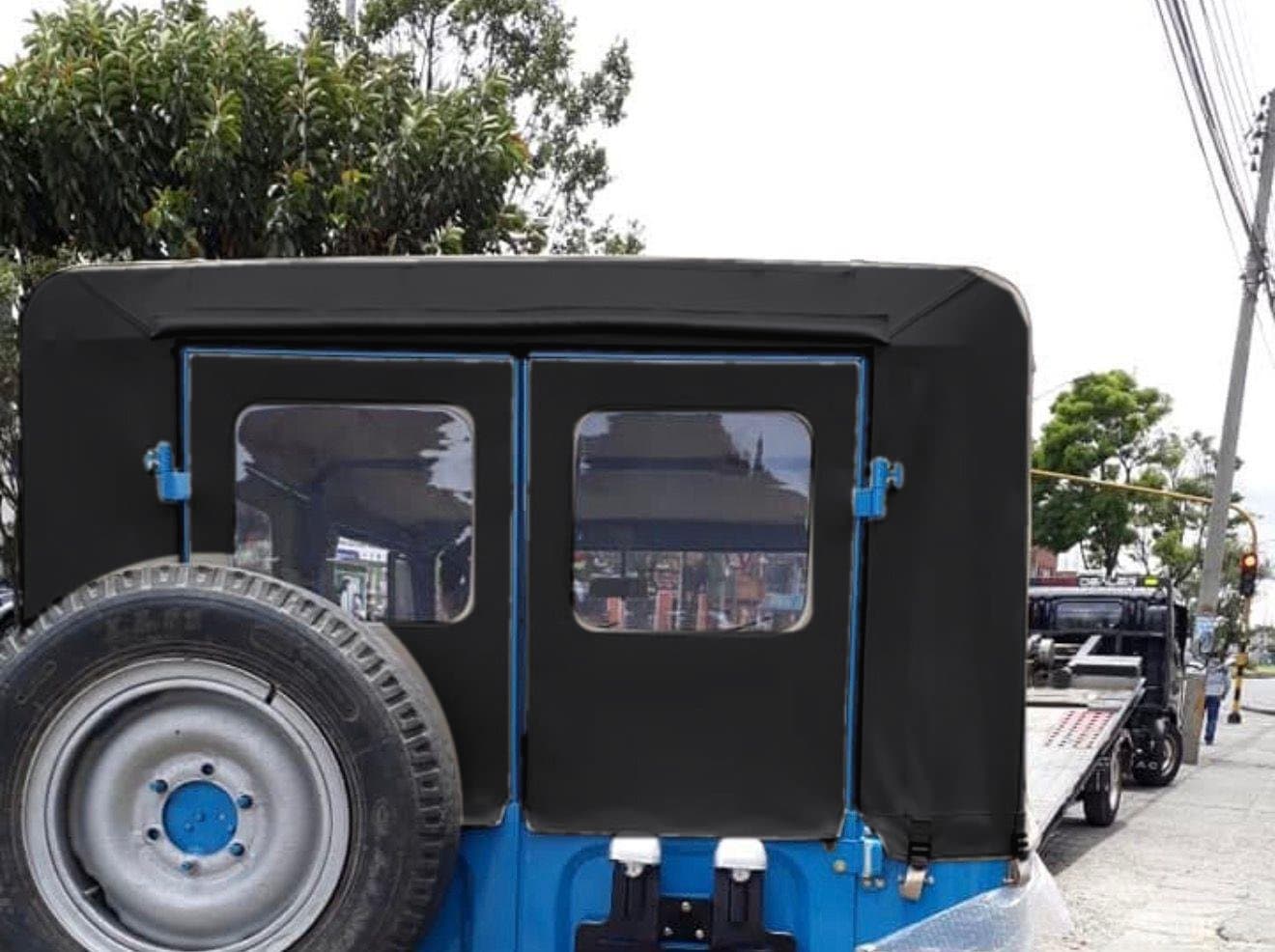
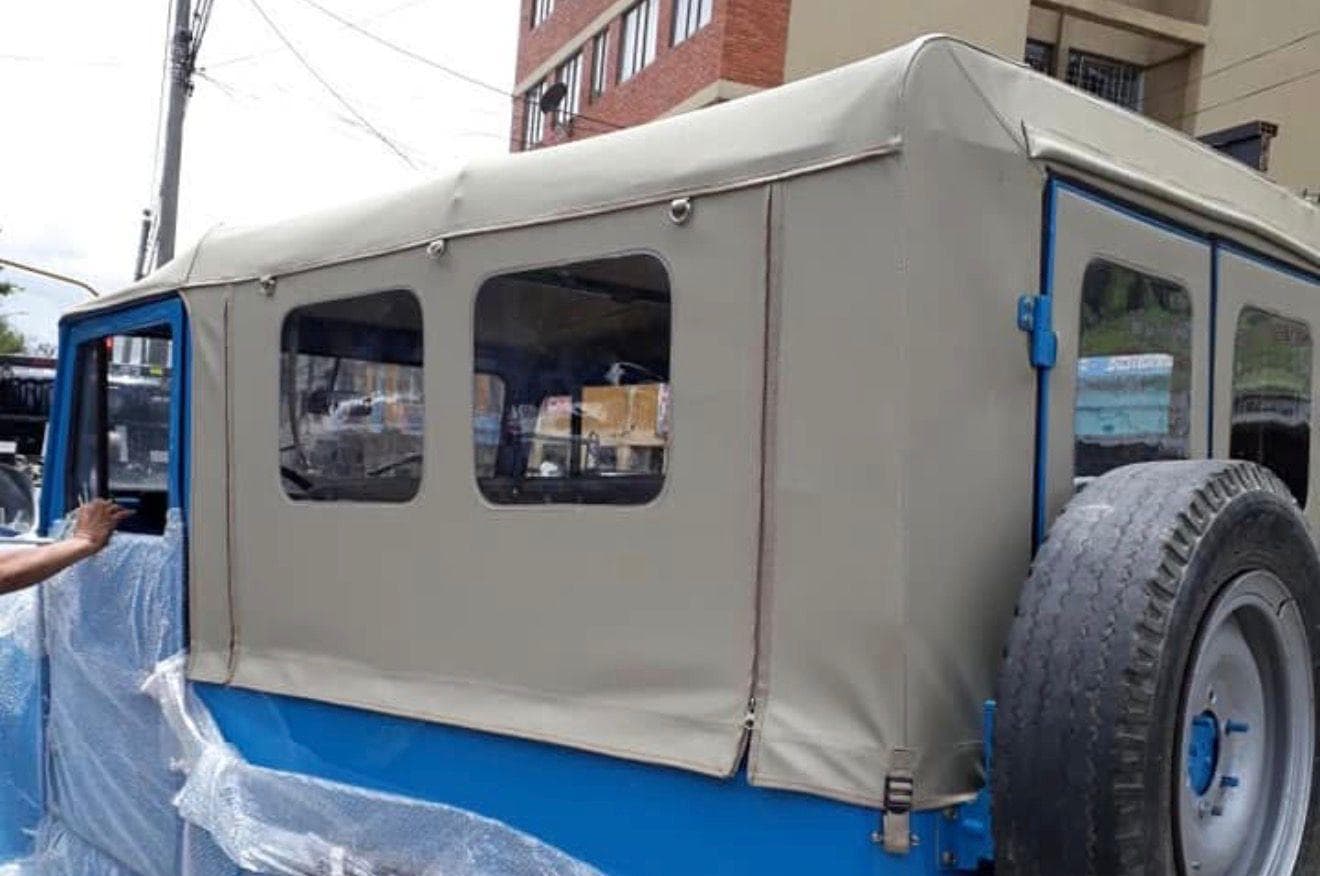
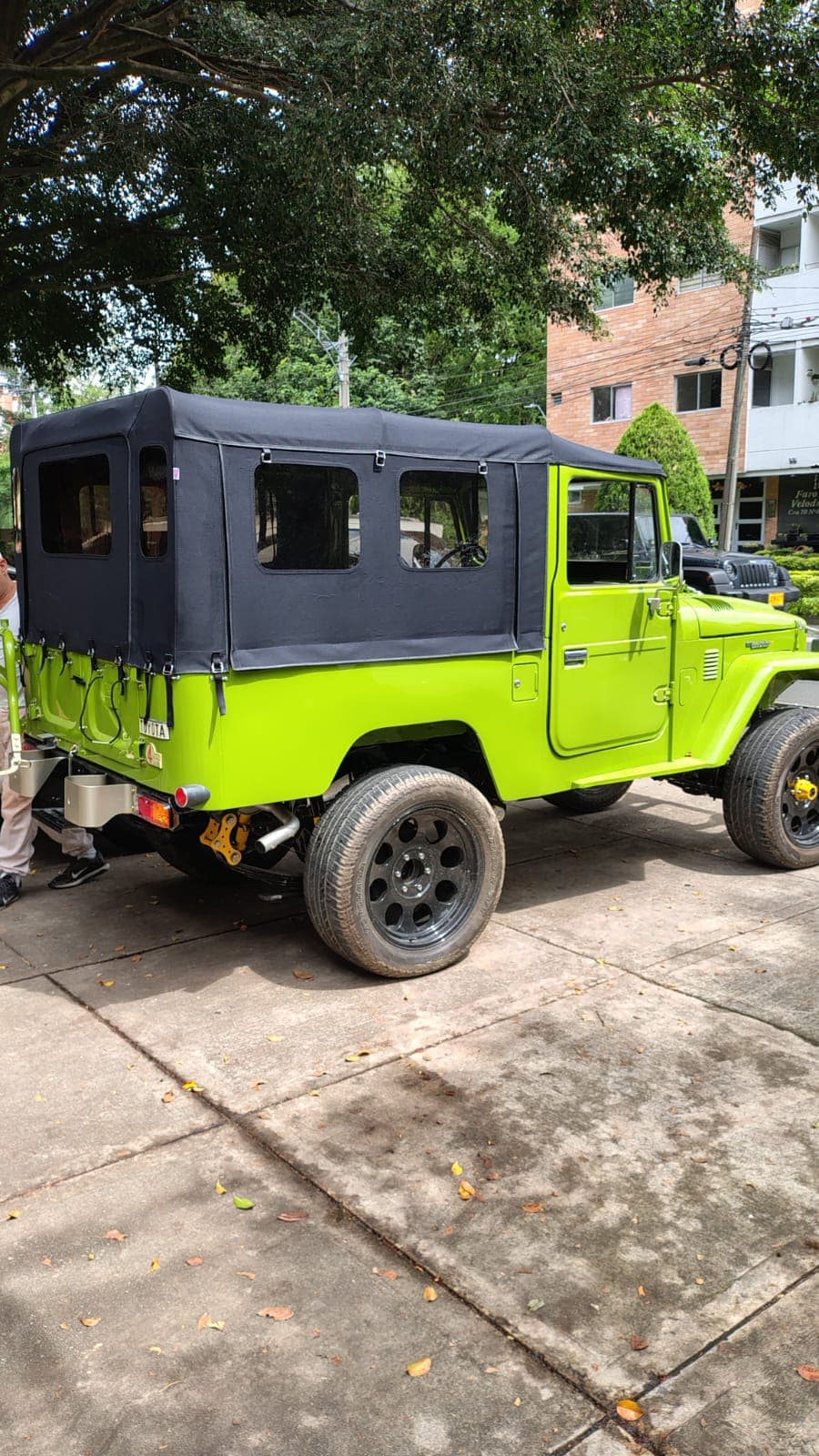
Here's the good news for owners: the FJ40 vs BJ40 debate doesn't affect your top at all. Our full soft top for FJ40 / BJ40 / BJ42 is cut to Toyota's original short-wheelbase pattern and fits all four models.
It includes the roof, sides, doors and rear window, in UV-treated vinyl, with YKK marine-grade zippers, stainless hardware and welded seams. It mounts on the original bows and factory fasteners, with no drilling. It ships without bows: your truck's bows carry it.
The one real choice is the back of the truck, which varies by year and market, not by engine:
- drop tailgate: the bottom of the top straps down over the tailgate;
- rear barn doors: two side-hinged doors.
Just look at your truck. Our FJ40 soft top buying guide also covers colors (beige or black), windows and what to check before ordering.
How to tell which one you have
The quickest way is the model code:
- on the ID plate in the engine bay;
- on the frame number stamped on the chassis, which should match your paperwork;
- on the engine itself, whose code (B, 2B, 3B, F or 2F) confirms the version.
Keep in mind that many Land Cruisers have been re-engined over the decades. A BJ40 might run a 3B today, and plenty of FJ40s in the US have had engine swaps. For the soft top, it doesn't matter: the body is still short wheelbase.
You can reach us through the contact page, or go straight to the FJ40, BJ40 and BJ42 soft top, shipped free to the US and Europe in 1 to 4 weeks. Planning the install? Read how to install an FJ40 soft top.
FAQ
What is the main difference between an FJ40 and a BJ40?
The engine. The FJ40 has a gas inline-six (3.9 L F, then 4.2 L 2F from 1975), while the BJ40 has a 3.0 L B four-cylinder diesel, from 1974. Body, chassis and wheelbase are the same.
What changed between the BJ40 and the BJ42?
The BJ42, from 1980-1981, gets the 3.4 L 3B diesel (about 90 hp versus about 80 hp), along with a 5-speed gearbox and front disc brakes. The body and chassis are unchanged.
Was the BJ40 sold in the US?
The diesel BJ versions were not part of Toyota's official US lineup. Many have since been imported, so you'll find them in the US today alongside the far more common FJ40.
Does an FJ40 soft top fit a BJ42?
Yes. The FJ40, BJ40, BJ41 and BJ42 share the same short-wheelbase body. Our full soft top fits all four; you just choose between drop tailgate and rear barn doors.
Not sure which top fits your truck? Send us a photo of your Land Cruiser and we'll get back to you quickly.