FJ40, BJ40 or BJ42: know what you're buying
The short wheelbase 40 Series Land Cruiser (90 in / 2,285 mm) comes in several versions that share the same body. What sets them apart is mainly the engine:
| Model | Engine | Notes |
|---|---|---|
| FJ40 | 3.9 L F gas inline-six, then 4.2 L 2F (from 1975) | The US-market 40 Series; thirstier than the diesels |
| BJ40 | 3.0 L B four-cylinder diesel (about 80 hp) | From 1974, not sold new in the US |
| BJ41 | 3.2 L 2B diesel | Late 1970s, limited distribution |
| BJ42 | 3.4 L 3B four-cylinder diesel (about 90 hp) | From 1980-1981, 5-speed and front disc brakes |
In the US, most trucks for sale are FJ40s with the F or 2F six. Parts, mechanics who know these engines and club support are easy to find. Imported BJ40s and BJ42s are more and more common too: the diesel is frugal and the BJ42's 5-speed is nicer on the highway, but plan ahead for diesel parts and local know-how. For more, read FJ40 vs BJ40 vs BJ42: what's the difference?.
Make sure the truck is what the ad says
A BJ40 sold as a BJ42, a swapped engine, a tub rebuilt with parts from another model: on trucks more than 40 years old, it happens all the time. Check:
- the model code on the ID plate in the engine bay;
- the frame number stamped on the chassis, which should match the paperwork;
- the VIN or frame number on the title, which should match the number stamped on the frame.
Our guide to Land Cruiser model codes explains how to read them.
The used FJ40 inspection checklist
Take your time. Go in daylight, on a dry day, with a flashlight, a small inspection mirror and, if you can, someone who knows Land Cruisers. Be wary of a truck that was pressure-washed right before you arrived, or an engine that's already warm when you get there.
1. Rust: the number one issue
Toyota's mechanicals have an excellent reputation. Rust is the real enemy of the 40 Series. Inspect first:
- the rocker panels and floor, from above and below;
- the drip rails and top of the tub;
- the door bottoms;
- the windshield frame corners, a classic spot where water sits;
- the frame rails and crossmembers.
Tap any suspect area: sound steel rings solid. Watch out for thick body filler, quick patch panels and freshly sprayed undercoating that can hide holes. Trucks from the Rust Belt or coastal areas deserve extra scrutiny; a dry-climate truck often starts from a better base.
2. The frame
Look along the entire frame: bends, cracks, repair welds, spring hangers and steering box mounts. An old impact or years of hard wheeling leave marks. A badly rusted or poorly repaired frame is a serious reason to walk away, or at least to renegotiate hard.
3. The engine
- Cold start: ask for the engine to be cold when you arrive. A healthy F or 2F should fire up without drama; a B or 3B diesel should start cleanly after glow plug preheat.
- Smoke: heavy, persistent smoke needs an explanation.
- Noises: knocking or unusual ticking.
- Leaks: oil, coolant, fuel. A little seepage is normal on an old truck; a puddle is not.
- History: service records, work done, original engine or not.
4. The drivetrain
Try every gear, cold and warm. Engage the transfer case and 4WD, in high and low range if possible. Listen to the axles for whining or clunking, check for leaks at the gearbox, transfer case and axles, and feel for play in the driveshaft U-joints.
5. Brakes, steering, suspension
A truck that pulls to one side under braking, vague steering, sagging leaf springs: nothing you can't fix, but it all adds up and belongs in the negotiation.
6. The paperwork
- A clean title in the seller's name, matching the truck (frame number, model).
- Registration rules, inspections and emissions requirements vary by state: check with your state's DMV before you buy.
- Service records and receipts.
- For an imported BJ, the import paperwork that was used to title the truck.
Imported BJs and the 25-year rule
Diesel BJs were not sold new in the US. Most of the ones you'll find came in under the federal rule that lets vehicles 25 years old or more be imported without meeting current US standards. Every BJ40 and BJ42 is well past that age, but the rules and how each state handles titling can change. Ask for the complete import file, make sure the title is clean, and check with your DMV and insurer rather than relying on the ad alone.
What drives the price of a used FJ40
Prices for a used FJ40 or BJ42 vary enormously. The gap between a full project truck and a properly restored one is huge. Rather than relying on a price guide, look at what really drives value:
- the condition of the body and frame, by far the most important factor;
- originality: matching engine, correct body, period equipment;
- the model and engine: an FJ40 and a BJ42 don't appeal to the same buyers;
- the paperwork: a clean title and documented history;
- the quality of the restoration, backed by receipts and photos.
Compare several listings over the same period, and remember that a cheap project truck often ends up costing more than a solid one bought for more money up front.
Plan a budget for the work ahead
Even a good FJ40 needs some spending after you buy it. Make a list before you sign, and keep a cushion for surprises.
- Basic service: engine, gearbox, transfer case and axle oils, filters, coolant, brake fluid.
- Tires and brakes: tires are often old even if they look fine, plus pads, shoes and hoses.
- Rust: treatment, metal repairs, even replacement body panels.
- Suspension and steering: springs, shocks, bushings, tie rod ends.
- Electrical: tired wiring harnesses, lighting, starting.
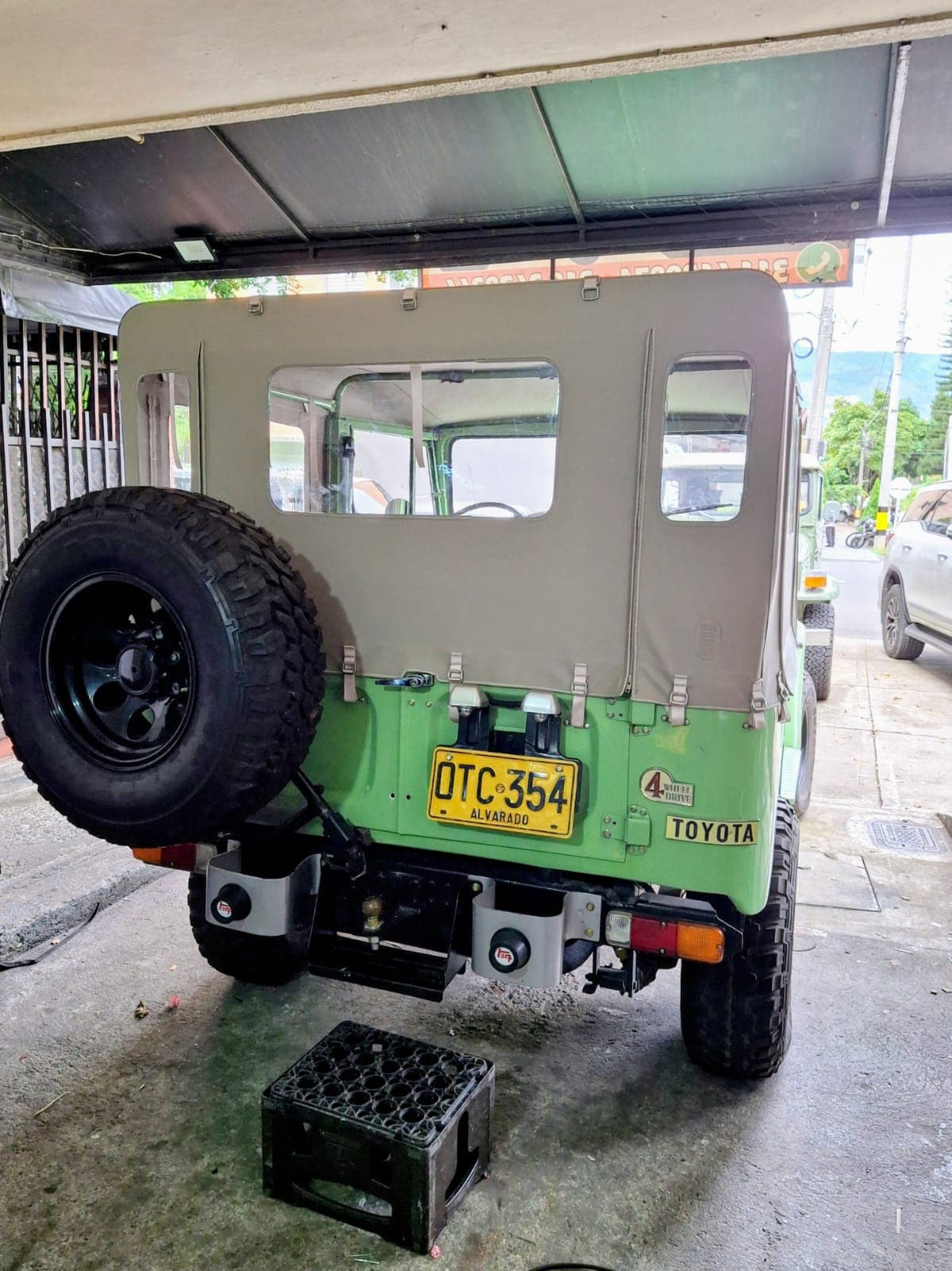
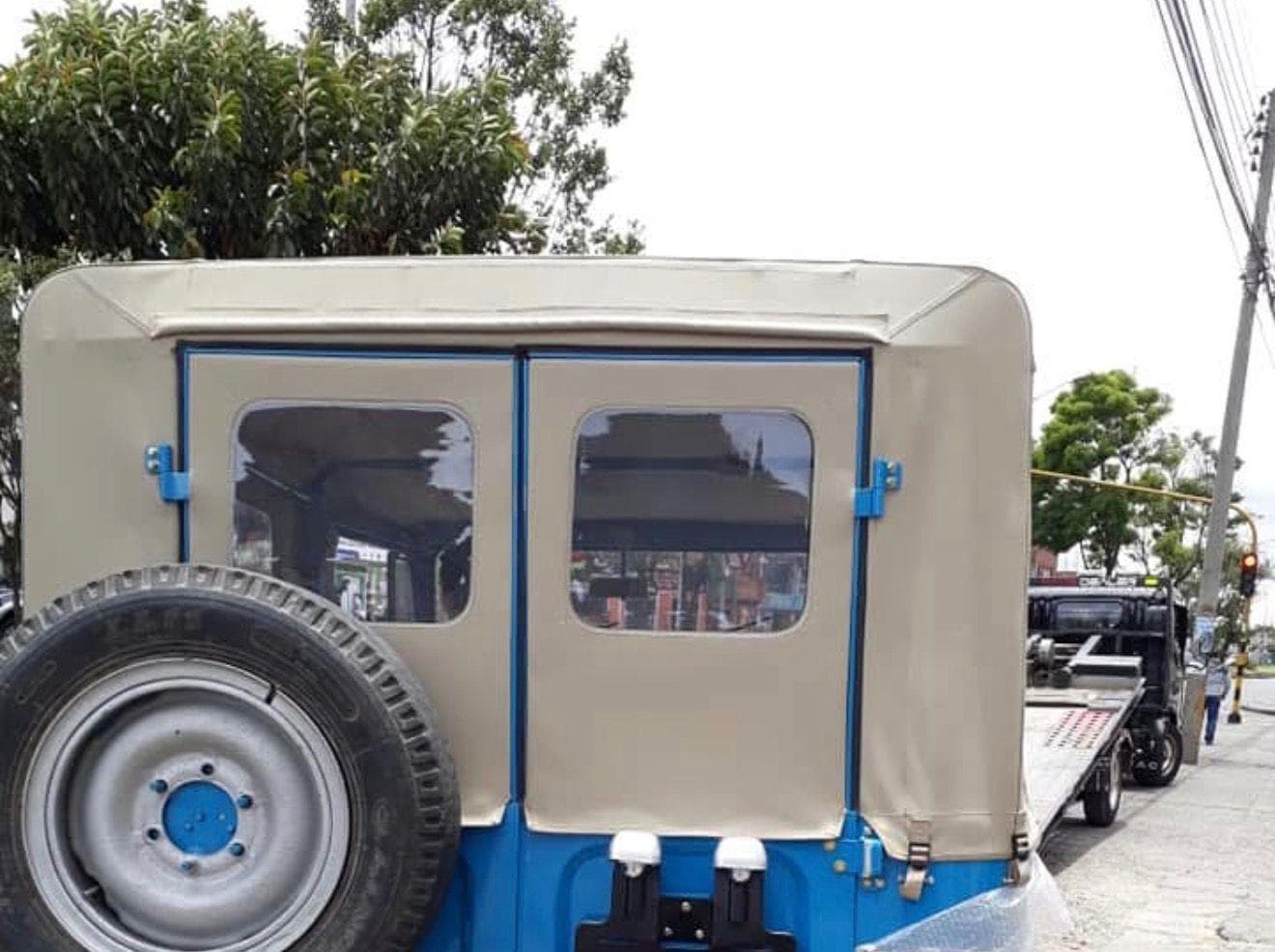
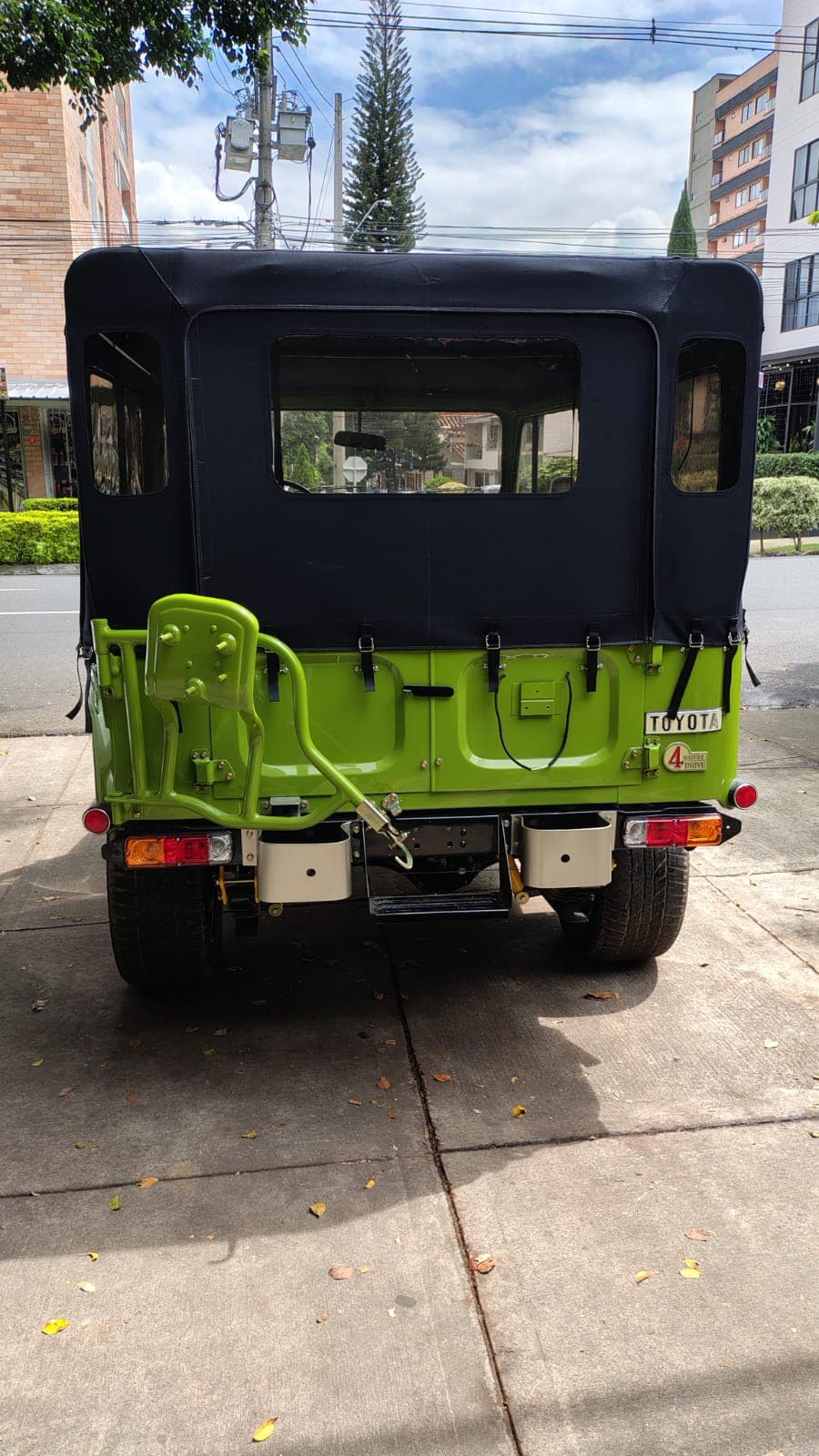
- The top: a worn, torn or missing soft top is very common on an old truck. It's also one of the most visible upgrades.
Don't forget the soft top
An old top that leaks, with cloudy windows, quickly spoils the fun. Before you buy, check that the bows and factory mounting points are present and in good shape: you need them to fit a new top. Note too whether the truck has a drop tailgate or rear barn doors, because the top is cut differently. Our drop tailgate vs barn doors guide helps you tell them apart, and fixing FJ40 soft top leaks covers what you can save on an existing top.
Our FJ40 / BJ40 / BJ42 full soft top is made of UV-treated vinyl, cut to Toyota's original pattern, and mounts on the original bows with no drilling. It ships without bows, free to the US with tracking, in 1 to 4 weeks. Current pricing is on the FJ40 / BJ40 / BJ42 soft top page.
Final tips before you sign
- Don't rush: a rare truck may stay rare, but a bad buy is expensive.
- Bring an expert: a Land Cruiser specialist or a shop that knows these trucks.
- Take a real test drive of at least twenty minutes, starting from cold.
- Photograph everything: ID plate, frame number, title, rusty areas.
- Keep budget in reserve for the work ahead, including the top.
Once your FJ40 is in the garage, you can install a new soft top yourself. And if you're unsure about the model or fitment, send us a photo.
FAQ
FJ40 or BJ42: which one should I buy?
Both share the same body and chassis. The FJ40 has a gas six and is the easiest to support in the US. The BJ42 has a 3.4-liter 3B diesel, a 5-speed and front disc brakes, but it's an import. The truck's condition matters more than the model.
What's the first thing to check on a used FJ40?
Rust: rocker panels, floor, drip rails, door bottoms, windshield frame corners and frame rails. The mechanicals are tough, but a badly rusted body or frame is expensive to fix.
Can I legally register an imported BJ40 or BJ42 in the US?
Vehicles 25 years old or more can generally be imported without meeting current US standards, and every BJ40 and BJ42 is well past that age. Titling rules vary by state, so get the full import file and check with your DMV before buying.
Should I plan on replacing the soft top after buying?
Very often, yes: on an old truck the top is usually worn, torn or missing. Before buying, check that the bows and factory mounting points are there, and note whether the rear has a drop tailgate or barn doors.
Not sure which top fits your truck? Send us a photo of your Land Cruiser and we'll get back to you quickly.