What to expect from a soft top
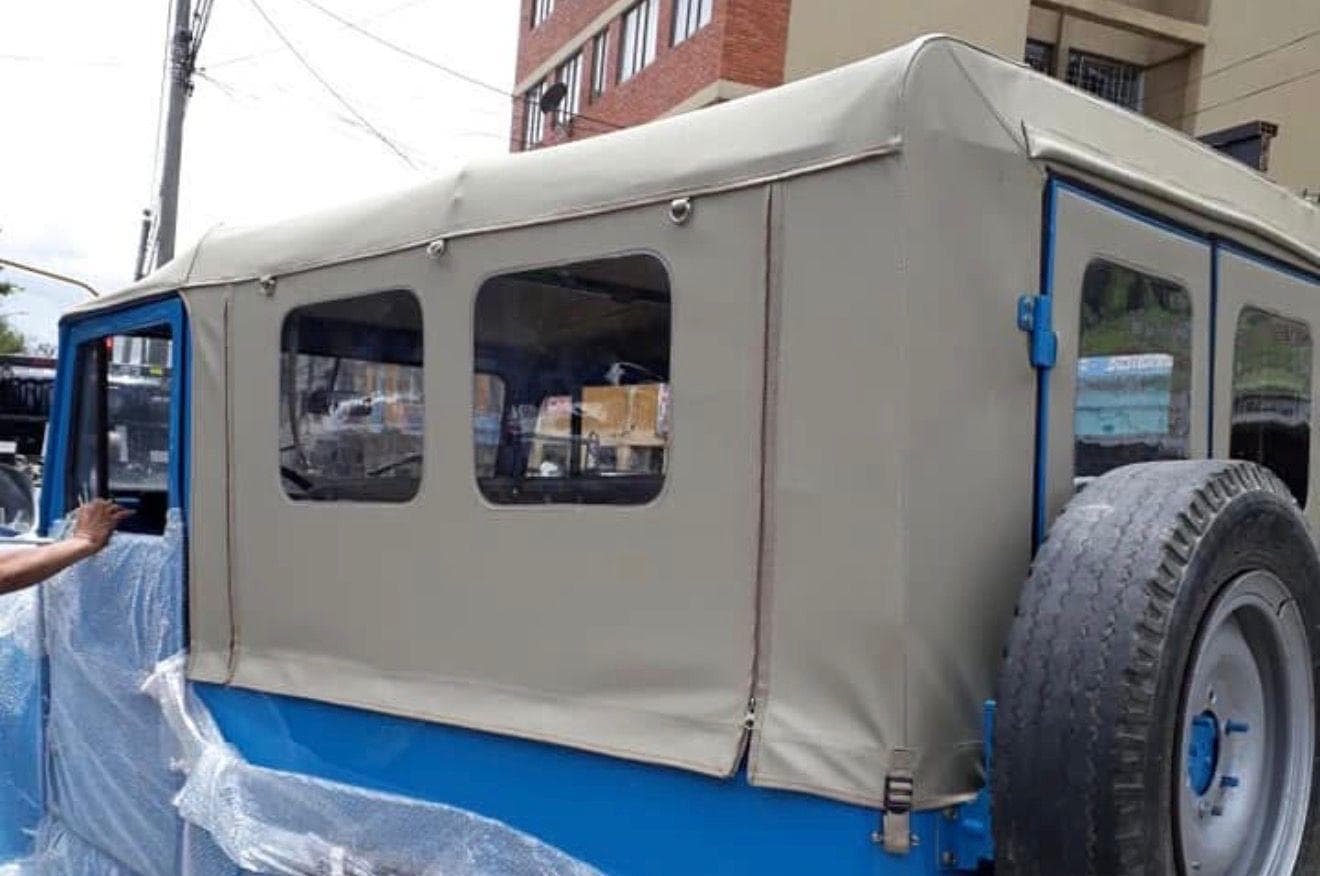
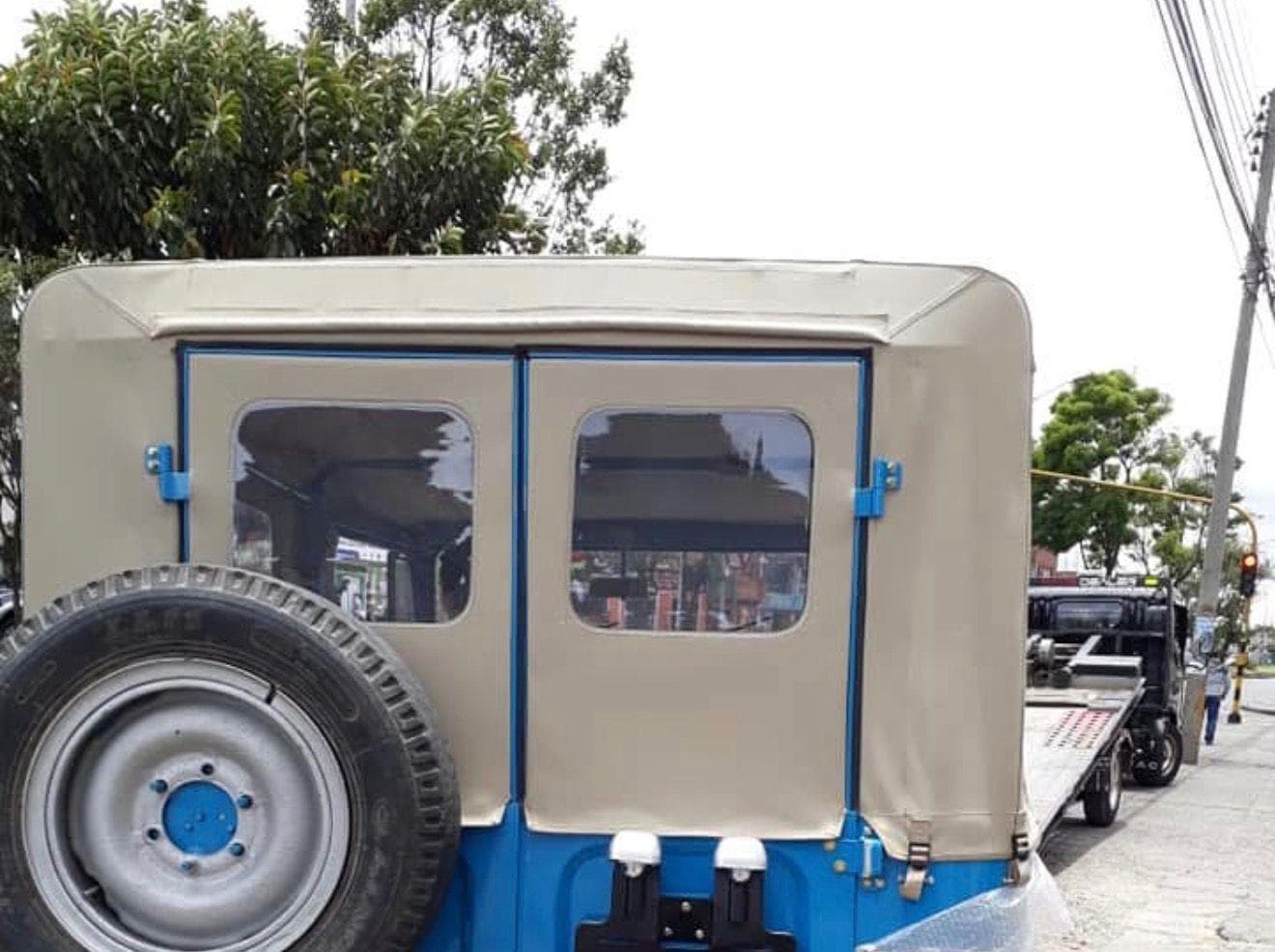
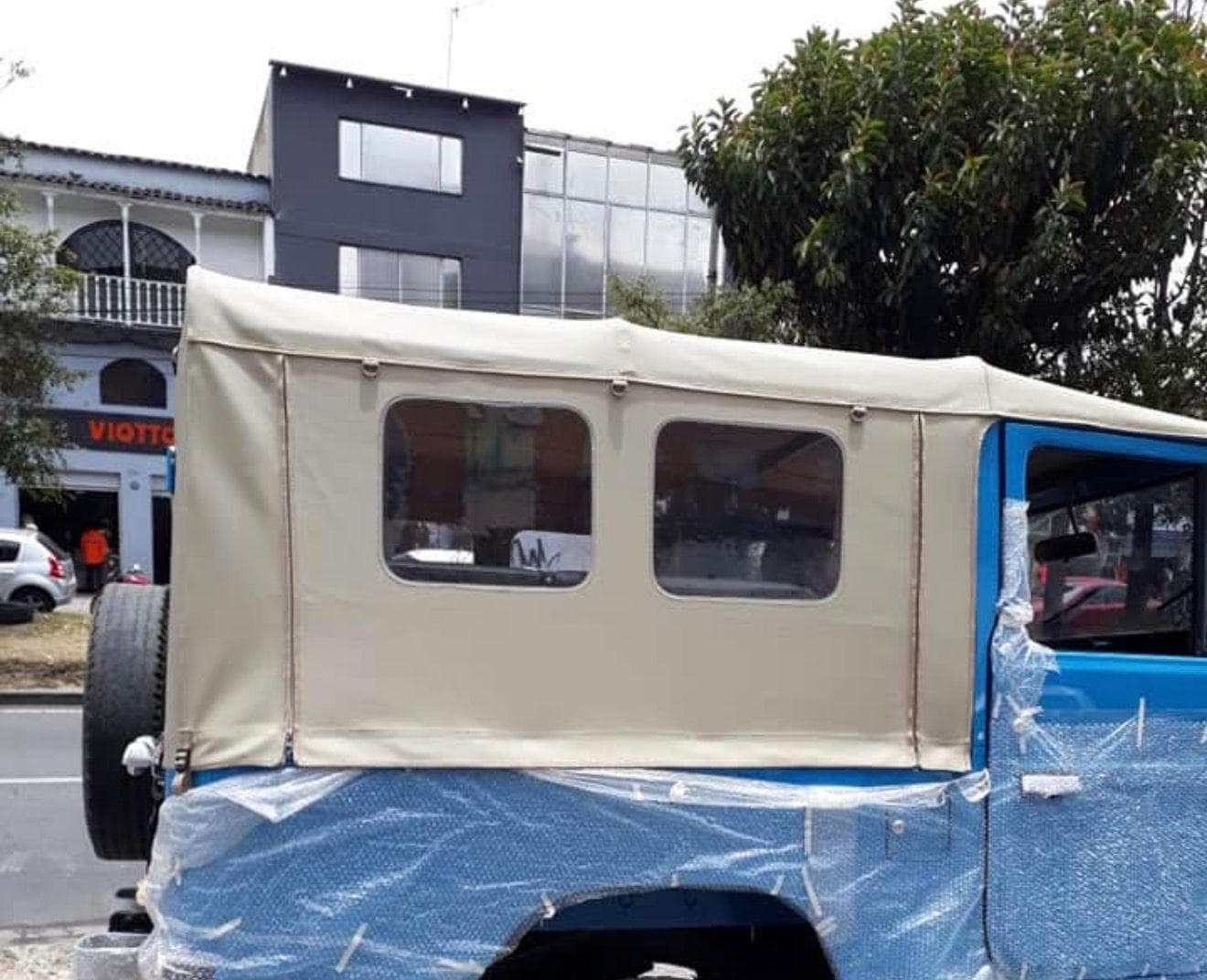
Let's be honest: a soft top is not a steel roof. On a soft-top Land Cruiser, keeping the rain out depends on the vinyl, the seams and the zippers, but above all on how the top is tensioned and fastened. Properly installed and in good condition, a vinyl top keeps you dry, including at highway speed in the rain.
What a top will never do is seal itself by magic. A top that's loose, sitting on bent bows or on a tub missing some of its fasteners will let water in, even when it's brand new.
Finding the leak: the hose test
You can only fix what you've located. Water travels: it gets in at one spot and often drips somewhere else. The simplest method:
- Work as a team: one person outside with the hose, one inside with a flashlight.
- Spray gently with a garden hose, never with a pressure washer up close.
- Go section by section, bottom to top: lower doors, sides, rear, then the windshield header, then the roof. If you start with the roof, water runs everywhere and you'll never know where it came from.
- Let the water run for a minute or two on each section before moving on.
- Mark every leak with a piece of masking tape on the inside.
Do this on a dry top, on a mild day. You'll know whether the problem is in one place (a seam, a zipper, a corner) or everywhere (porous material, poor tension).
Cause 1: the top isn't tight enough
The classic. A loose top forms dips on the roof. Water pools there, adds weight and eventually works its way through the seams or along the edges. On the sides, a top that flaps leaves gaps along the tub.
Fixes:
- go all the way around and re-tighten the straps and fasteners evenly;
- after a new install, let the vinyl relax in the sun for a few days, then re-tension it. That's normal;
- adjust tension on a mild day, never in the cold, when vinyl is stiff.
All the adjustments are covered in How to install an FJ40 soft top.
Cause 2: bent bows or missing fasteners
A bow that's spread, sagging or out of line keeps the top from taking its proper shape. The roof dips, one side pulls tight and the other gapes. Same story when a hook, snap or strap point is missing: the top isn't held down at that spot.
Fixes:
- check the bows for symmetry, from the front and from the side;
- inspect the windshield frame header, the first attachment point of the top;
- replace any missing or torn-out fasteners.
We explain how to inspect and restore bows in FJ40 top bows: inspect and restore.
Cause 3: the windshield header
This is a weak spot on every soft-top Land Cruiser. The top attaches there, and all the water running off the windshield lands right on that joint. If the front edge is crooked or loosely fastened, or the header seal is worn, water gets through and drips on the driver's knees.
Fix: re-center the front edge, make sure every fastener on the header is in place and snug, and check the condition of the header itself. The front edge is the reference point for the whole install: get it right and the rest follows.
Cause 4: zippers, doors and windows
- A zipper left partly open or that has split creates a straight line of leaks. Close it slowly, with the panel lined up, without forcing. If it fights you, tension around it is usually to blame.
- Doors: a soft door that rubs or doesn't sit flat against the frame lets water in at the top or the front edge.
- Clear windows: a window that's cracked or coming unstitched around its edge is a leak. A local upholstery shop can sometimes repair it. If several windows are tired, it's usually a sign the whole top is near the end.
Zipper care (brushing, zipper lubricant or wax, never grease) is covered in FJ40 soft top care and cleaning. Rear-end leaks can also come from a top that doesn't match the truck: see FJ40 drop tailgate vs barn doors.
Cause 5: worn-out material or seams
An old cotton canvas top eventually turns porous. It shrinks, mildews and loses its waterproofing. You can re-treat it, but badly worn canvas won't become watertight again. Sewn seams also start to weep through the needle holes over time.
Vinyl behaves differently: it's waterproof by nature. But it ages in the sun too if it isn't protected, and cracked vinyl will eventually leak.
Leak diagnosis by symptom
| Symptom | Likely cause | What to do |
|---|---|---|
| Water pooling on the roof | Loose top or sagging bow | Re-tension, check the bows |
| Drips at the windshield | Front edge loose or off-center | Re-center, check the header fasteners |
| Water running down one side | Missing fastener, gaping panel | Replace the fastener, re-tension |
| Leak in a straight line | Zipper not fully closed or worn | Close properly, clean and lube, replace if needed |
| Water around a window | Cracked or unstitched window | Upholstery shop, or a new top |
| Damp everywhere | Porous material, worn seams | Replace the top |
Mistakes that make leaks worse
- Silicone or sealant smeared on the top: it hides the problem, stains the material and makes a proper repair harder.
- Drilling the tub to add fasteners: new holes mean new leaks, and rust down the road.
- A pressure washer up close, which wears out the seams.
- Storing the top wet, which leads to mildew in the material and the stitching.
When it's time for a new top
If the hose test shows water coming in all over, the material is porous or cracked and the windows are tired, a new top makes more sense than a pile of patches.
Our full soft tops are made of UV-treated vinyl with welded seams, YKK marine-grade zippers and stainless hardware. Cut to Toyota's original pattern, they mount on the factory fasteners, with no drilling. They ship without bows, so the ones on your truck need to be in good shape.
For an FJ40, BJ40, BJ41 or BJ42, everything is in our FJ40 soft top buying guide and on the short-wheelbase soft top page. For a BJ73, HZJ73 or KZJ73, see our 70 Series soft top. Other model, or can't pin down the leak? Send us a photo.
FAQ
Can a soft top really be watertight?
Yes. A vinyl top in good condition, properly tensioned over straight bows and secured at every fastener, keeps the rain out well. It's not a steel roof, though: the quality of the install matters as much as the top itself.
My new soft top leaks. Is that normal?
For the first few days, a new top hasn't reached its final tension. Let it relax in the sun, re-tighten the straps and fasteners, then repeat the hose test. If water still gets in, check the bows and the front edge at the windshield header.
How do I find where water gets into my top?
Spray gently with a garden hose, one section at a time, starting at the bottom and finishing with the roof, while someone inside watches with a flashlight. Mark each leak with masking tape.
Should I put silicone on a leaking soft top?
No. Silicone on the top hides the cause without fixing it, stains the material and makes real repairs harder. Find the cause first: tension, bows, fasteners, a zipper or worn material.
Not sure which top fits your truck? Send us a photo of your Land Cruiser and we'll get back to you quickly.