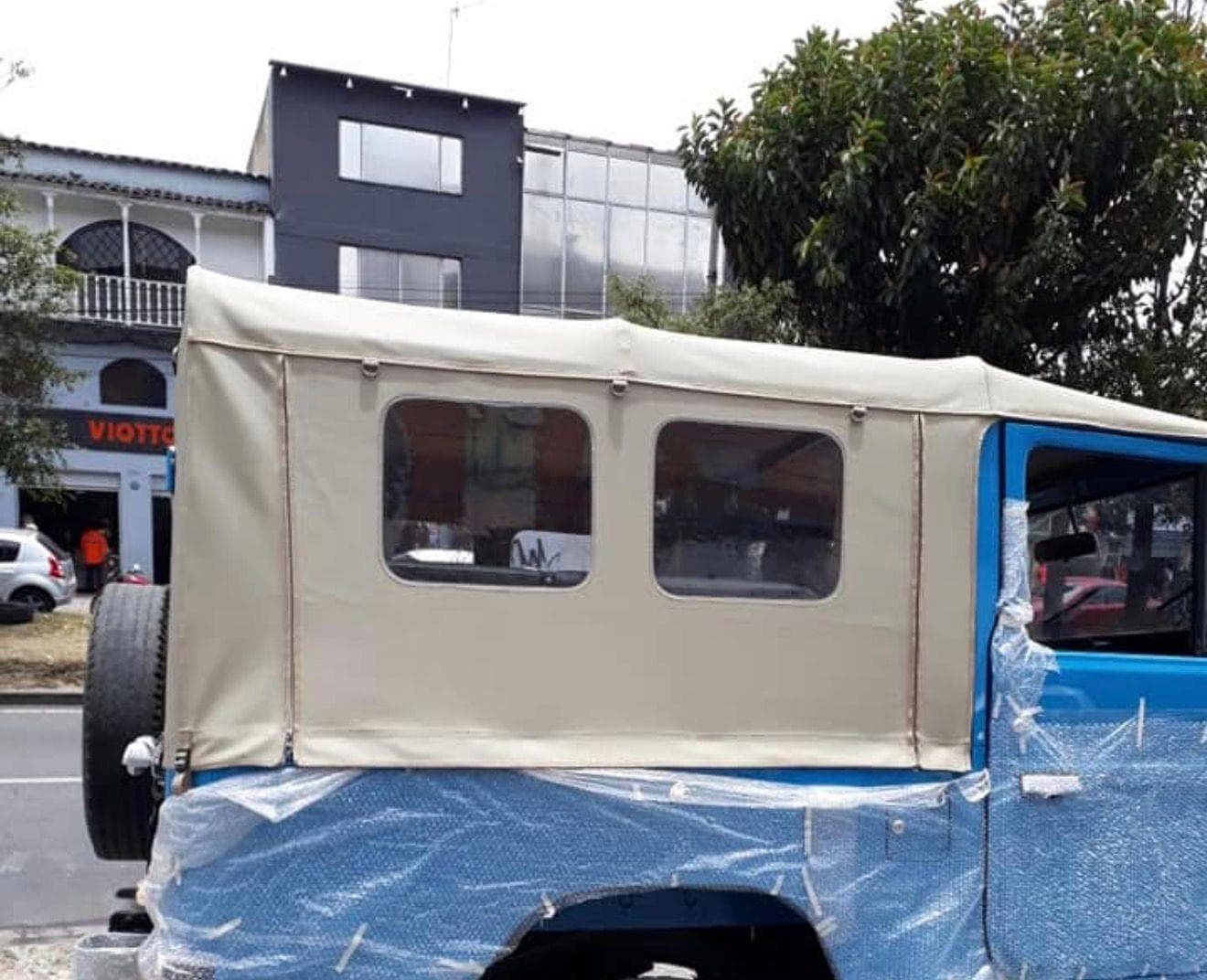
Two roofs, two ways to drive
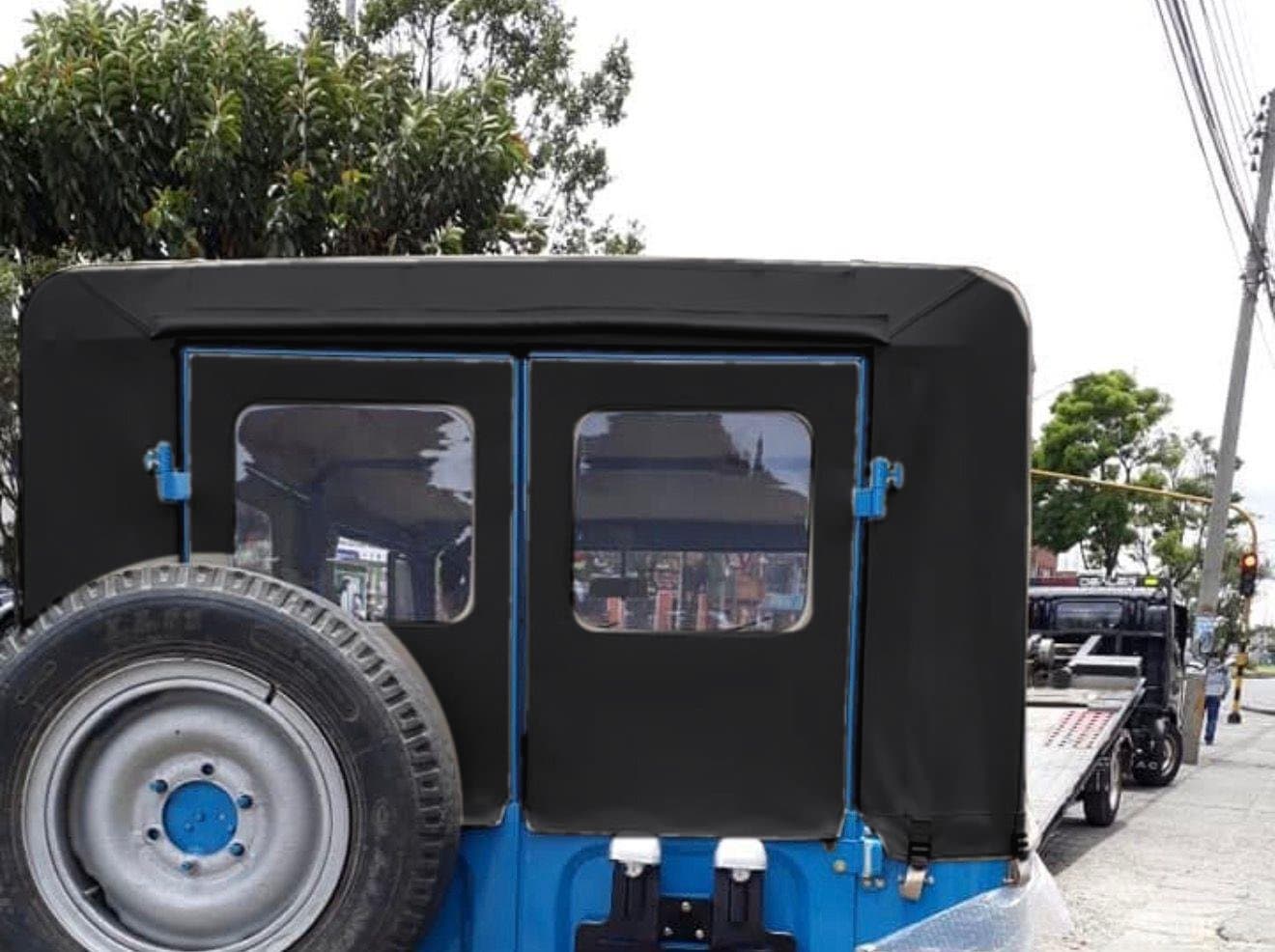
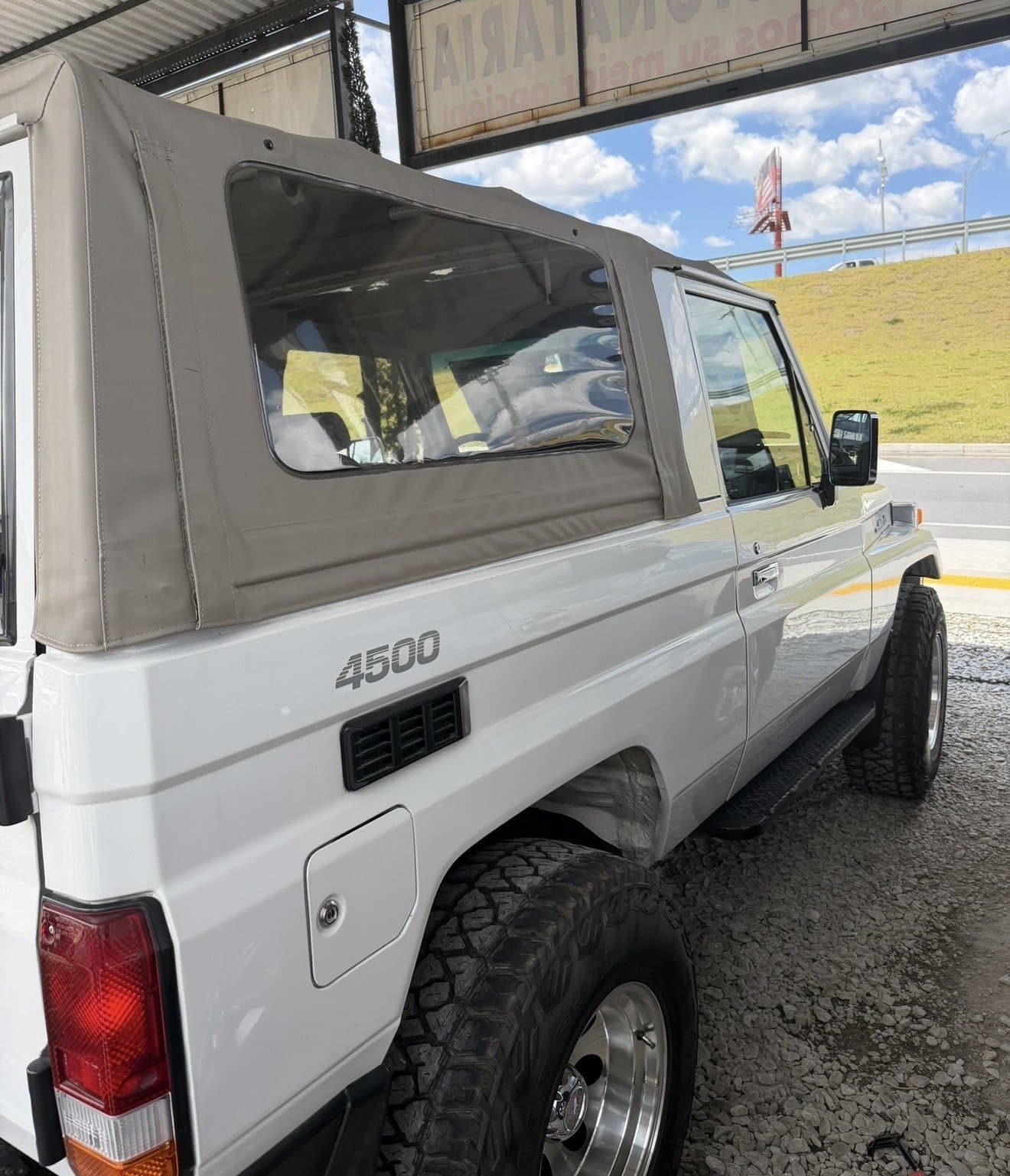
From the start, the 40 Series came as a soft top, a hard top or a pickup. On the 70 Series, hard tops are everywhere, but a soft top is still a popular option. Neither is better in absolute terms: the right answer depends on your climate, how you use the truck and the character you want it to have.
The best way to decide is to compare them point by point.
FJ40 soft top vs hard top: side by side
| Criteria | Full soft top | Hard top |
|---|---|---|
| Weight | Light | Heavy |
| Open-air driving | Yes, remove some or all of it | No (or a big job to remove) |
| Heat and cold insulation | Lower | Good |
| Noise insulation | Lower | Good |
| Theft protection | Low | Good |
| Look | Factory soft top | Closed, utilitarian |
| Removal | Easy, one or two people | Usually several people |
| Cost | Usually less | Usually more |
This is the big picture. Each line deserves some nuance: a good vinyl full soft top, properly installed, closes the truck tight against rain; and a neglected hard top can leak through its seals too.
Why owners choose a soft top
Open-air driving
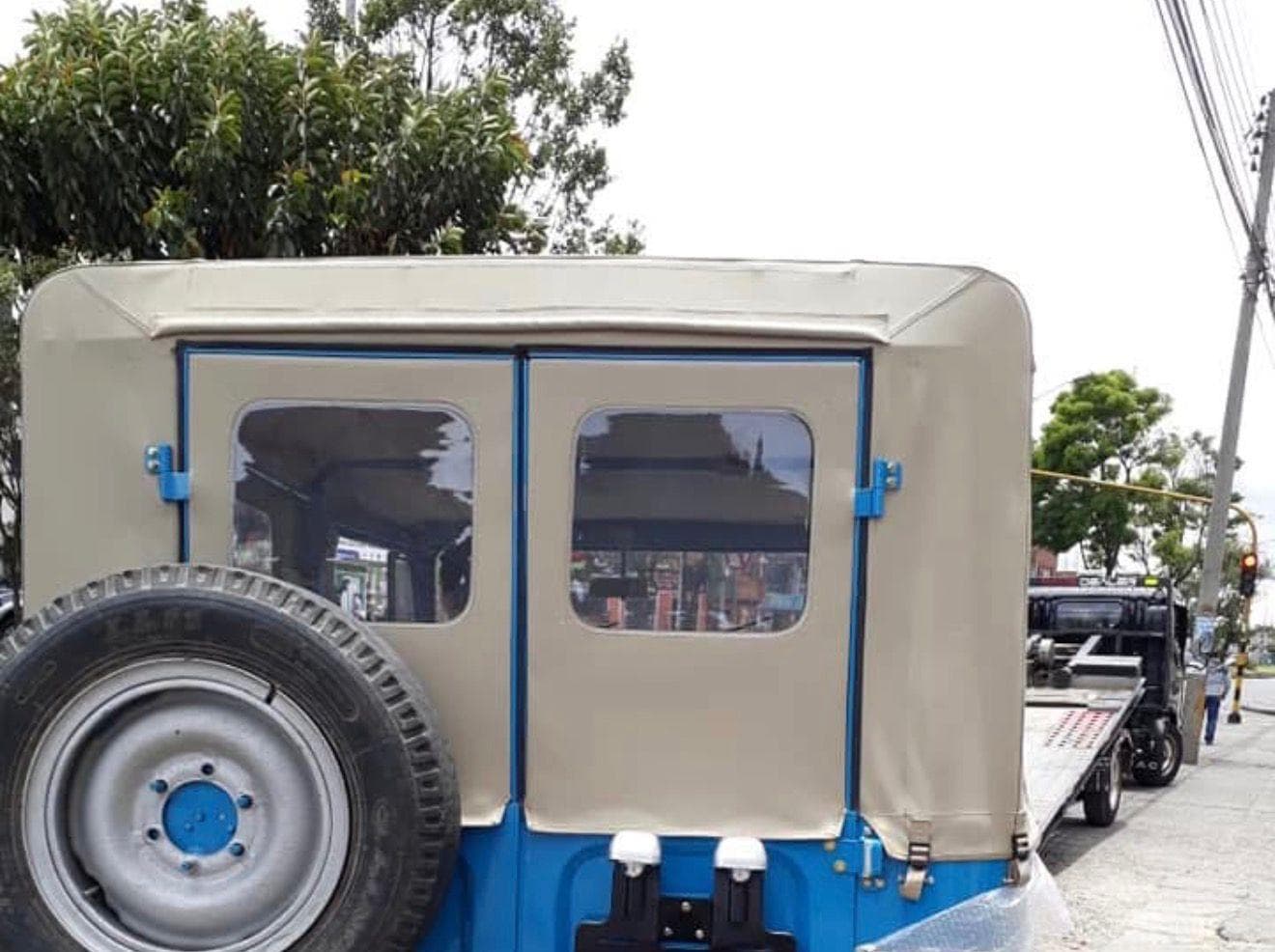
This is reason number one. With a soft top, an FJ40 transforms on a sunny day: pull the soft doors or the side curtains, fold the windshield down on a trail, and the truck is back to its original spirit. For a summer cruiser, nothing else comes close.
Less weight
A hard top puts a lot of weight high on the tub. A soft top makes the truck noticeably lighter. On a vintage 4x4, that means a little less load on the suspension and a slightly lower center of gravity.
The original look
For a faithful restoration, a beige top on bows is the reference silhouette of the 40 Series. A top cut to Toyota's original pattern keeps the truck's proportions exactly as they were.
Cost and simplicity
A full soft top usually costs less than a hard top and comes off without heavy tools. It stores on a garage shelf.
Why owners choose a hard top
Year-round comfort
A hard top does a better job against cold, heat and noise. On the interstate or in winter, the difference is real. If you sleep in your truck on a long trip, it's a big plus.
Security
A locking steel roof protects what's inside much better. With a soft top, don't leave anything valuable in the cab.
Toughness
Branches, hail, scraping through tight trails: a hard top takes it better. For an overland rig that runs narrow, overgrown tracks, that counts.
The trade-offs
A hard top is heavy, and removing it usually takes several people. Once it's on, most owners leave it for the season. It also changes the silhouette toward a more utilitarian look. And when it's off, you need room to store it, which isn't a small detail in a crowded garage. A soft top rolls up and fits in a bag.
The FJ40 and BJ40 case
On an FJ40, BJ40 or BJ42, the question is mostly about style and use.
- Collector truck, weekend drives: the soft top usually wins. It respects the original look and makes every drive more fun.
- Daily driver that sits outside through the winter: a hard top is more comfortable. A good vinyl top is still perfectly usable in bad weather.
- Restoration: check how your truck left the factory if originality is the goal.
If you go with fabric, our FJ40 soft top buying guide explains how to pick the right version: drop tailgate or rear barn doors, color, fitment.
The 70 Series case
The BJ73, BJ74, HZJ73 and KZJ73 were not sold new in the US, but more of them arrive every year, often wearing a factory or fiberglass hard top. They're travel trucks, and a fixed roof makes sense for long hauls.
Still, more and more owners fit a soft top for summer: the truck gets lighter, more open and more raw. The hard top stays in the garage and goes back on for winter or a long expedition. Our Land Cruiser 70 Series soft top guide covers compatible models and what to check before switching.
Switching from one to the other
Before going from a hard top to a soft top, check these points:
- Bows: a soft top sits on bows. If they disappeared along with the original soft top years ago, you'll need to find them. Our tops ship without bows.
- Factory mounting points: rails, hooks and anchor points need to be present and solid. A top cut to Toyota's pattern installs without drilling, as long as those points are there.
- Rear closure: on a 40 Series, a drop tailgate or rear barn doors change the cut of the top.
- Paperwork: if you change roof type, it's wise to check with your insurance company and your state's DMV.
The install itself is very doable: plan on half a day with two people the first time. The steps are in How to install an FJ40 soft top.
Having both
For many owners, the best answer to soft top vs hard top is: both. The hard top for winter, highway miles and long trips; the soft top for the warm months and weekend drives.
To keep the soft top in good shape while it's stored:
- wash it and let it dry completely before putting it away;
- roll the soft windows instead of folding them, with a cloth between them;
- store it somewhere dry, out of reach of rodents.
Our advice by profile
- You mostly drive in summer, for fun: soft top.
- You travel far, sleep in the truck, drive in winter: hard top, plus a soft top for summer if the budget allows.
- You're restoring a period truck: the original configuration, very often a soft top on the FJ40.
- You can't decide: start with the soft top, lighter and cheaper, and keep the hard top if you already have one.
Questions about fitment? Send a photo through the contact page, or see the FJ40 / BJ40 / BJ42 soft top and the 70 Series soft top.
FAQ
Is a soft top OK for winter driving?
Yes. A vinyl full soft top is waterproof and fully encloses the truck. It insulates less than a hard top against cold and noise, though. Just avoid working the zippers and soft windows in freezing weather.
Can I put a soft top on a Land Cruiser that came with a hard top?
Yes, as long as the truck has the original bows and soft top mounting points. Our top ships without bows and installs with no drilling. If you're unsure, send us a photo.
Is a hard top better against theft?
Yes. A locking steel roof protects your gear much better than a soft top. With fabric, don't leave anything valuable in the cab.
Do I need to update my paperwork if I switch roofs?
Rules vary, so it's wise to check with your insurance company and your state's DMV before driving with a different roof type.
Not sure which top fits your truck? Send us a photo of your Land Cruiser and we'll get back to you quickly.